
Taking the step to seek mental health support is an incredibly positive choice. However, knowing exactly where to start can feel confusing. When you are looking for help, it is easy to assume that traditional formal therapy is your only option.
At BE-OK, we want you to know that mental health care is not one-size-fits-all. Different stages of life and different challenges require different types of care. To make your search easier, we have broken down mental health support into three distinct levels. Understanding these options will help you find the right fit for your immediate needs and your long-term healing.
Level One: Healthcare Professionals
When you think of mental health, your primary care doctor might not be the first person who comes to mind. Yet medical professionals are an excellent starting point for your mental health journey. These providers approach your mental health from a clinical and holistic perspective. They can run tests to ensure your symptoms are not caused by underlying physical conditions like thyroid issues or vitamin deficiencies. They are trained to look at the big picture of your physical and mental well-being to help you establish a baseline for your health. Other mental health professionals include:
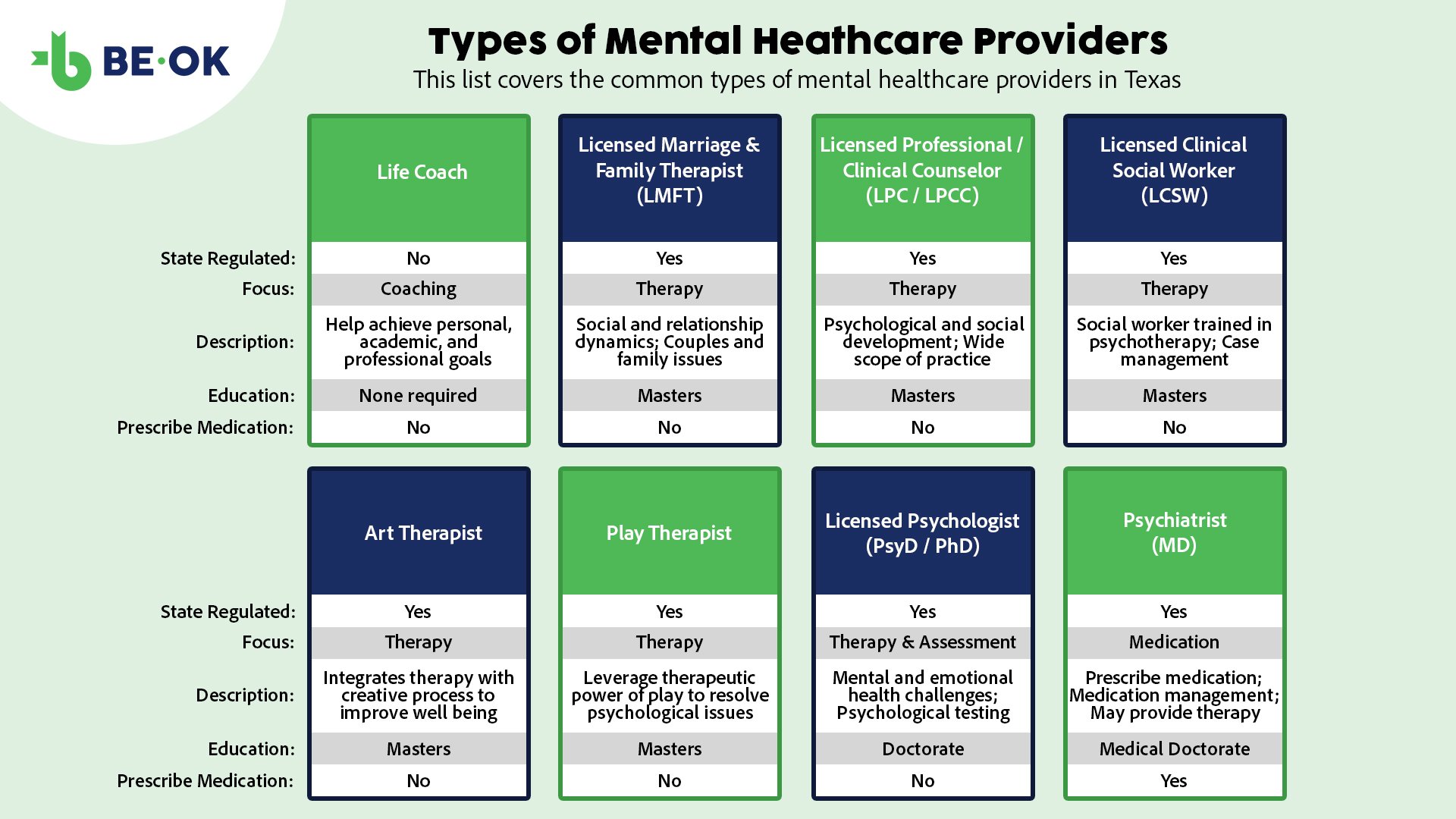
- Psychiatrists (MD or DO): Psychiatrists are medical doctors who specialize in diagnosing and treating mental health conditions. Because they are physicians, they understand the complex relationship between your physical and mental health. While some do offer talk therapy, most will focus on your overall medical picture and refer you to a separate therapist for weekly counseling.
- Psychiatric Mental Health Nurse Practitioners (PMHNP): Psychiatric nurse practitioners have advanced nursing degrees and specialized clinical training in mental health. They can assess your symptoms and diagnose conditions. Many people find that nurse practitioners offer a deeply compassionate and patient-centered approach to medical care.
A helpful note: If you and your provider decide that medication is the right path for your treatment, the healthcare professionals listed above are the ones who have the authority to prescribe and manage it for you.
Level Two: Professional Therapists
If you are looking for a dedicated space to talk through your experiences, professional therapists are exactly what you need. The main focus of this group is talk therapy. Professional therapists provide a safe and confidential environment where you can unpack your thoughts, process difficult emotions, and heal from past trauma. Rather than focusing on medical diagnoses, they help you develop actionable coping skills and healthier thought patterns.
- Psychologists (PhD or PsyD): Psychologists hold doctoral degrees in psychology. They have spent years studying human behavior, emotions, and the way the mind works. They are highly trained in providing evidence-based therapies, such as Cognitive Behavioral Therapy. Psychologists are also uniquely qualified to perform specialized psychological testing and evaluations.
- Licensed Professional Counselors (LPC or LMHC): Licensed Professional Counselors and Licensed Mental Health Counselors hold master's degrees and have extensive clinical training. These professionals are dedicated purely to talk therapy. They can help you manage anxiety, overcome grief, and build better self-esteem using a variety of therapeutic techniques tailored to your specific goals.
- Licensed Marriage and Family Therapists (LMFT): If you are struggling with relationship issues or family conflict, an LMFT is usually the best choice. These master's-level therapists specialize in how people interact within relationships. They treat couples and families, but also see individuals who want to work on their relationship patterns and communication skills.
Level Three: Community and Volunteer Support Groups
Sometimes you need help right away, and waiting for a formal medical appointment is simply not an option. This is where community and volunteer-led support systems shine. The greatest advantage of this level of care is accessibility. These groups are usually much easier to get into, often completely free, and can provide immediate relief when you are in distress.
- Community Outreach Social Workers (LCSW or BSW): Social workers view your mental health through a broad, community-focused lens. They consider how your environment, housing, and relationships impact your well-being. Working in community centers or local agencies, they provide actionable, empathetic support to help you access immediate resources and counseling.
- Peer Support Groups: Sitting in a peer-led support circle allows you to speak with people who truly understand what you are going through. Sharing your experiences with others facing similar challenges can make you feel less isolated and much more grounded.
- Faith-Based and Church Groups: Many religious and spiritual communities offer volunteer-led support groups or pastoral counseling. These provide a familiar and comforting setting for people looking for immediate guidance rooted in their personal beliefs and local community.
Simple Tips for Choosing Your Provider
Knowing the titles is only half the battle. Here are a few practical tips to help you narrow down your search:
- Check your insurance: Call your insurance provider or use their online directory to find in-network professionals. This will save you a significant amount of money.
- Identify your specific needs: If you are dealing with a specific issue like trauma or an eating disorder, look for a provider who lists that as a specialty.
- Ask for a consultation: Many therapists offer a free 15-minute phone call. Use this time to ask about their approach and see if their personality feels like a good match for you.
- Trust your gut: The connection you have with your provider is the biggest predictor of success in therapy. If you do not feel comfortable after a few sessions, it is completely okay to switch to someone else.
Creating Your Support System
You do not have to choose just one of these levels. Many people find that a combination works best. You might attend a community peer group for immediate support while waiting for your first appointment with a professional therapist.
There is no wrong way to start. The best level of care is simply the one you feel most comfortable reaching out to today.
BE-OK makes it easy for you to find the support system you need by featuring mental health resources in our area to help you get started.